Guides / How Mobile Games Work
How Leagues and Leaderboards Work in Mobile Games
 ONI Games · Published
Why mobile games put you in small weekly leagues instead of one giant leaderboard, how promotion and relegation work, and the real rules of the leagues in our block puzzle game.
Mobile games use two kinds of rankings: global leaderboards, where everyone competes on one list, and leagues, where you compete in a small group for a week and the best move up. Leagues exist because a global list is discouraging: if millions play, almost nobody sees their name near the top. In a group of 30, a good week can put you in first place.
How a typical league works: join a group of about 30 players, earn points for a week, the top few move up a league, the bottom few move down, and everyone starts again on Monday.
Global leaderboards vs leagues
| Global leaderboard | League | |
|---|---|---|
| Who you compete with | everyone | a small group of similar players |
| Time frame | all-time, or weekly | usually one week |
| Chance to be near the top | tiny for most players | real for everyone |
| Reward | bragging rights | promotion and prizes each week |
Leaderboards are good for the best players; leagues are good for everyone else. Many games have both. The league format with groups of about 30 and weekly promotion became familiar far beyond games, in learning apps like Duolingo.
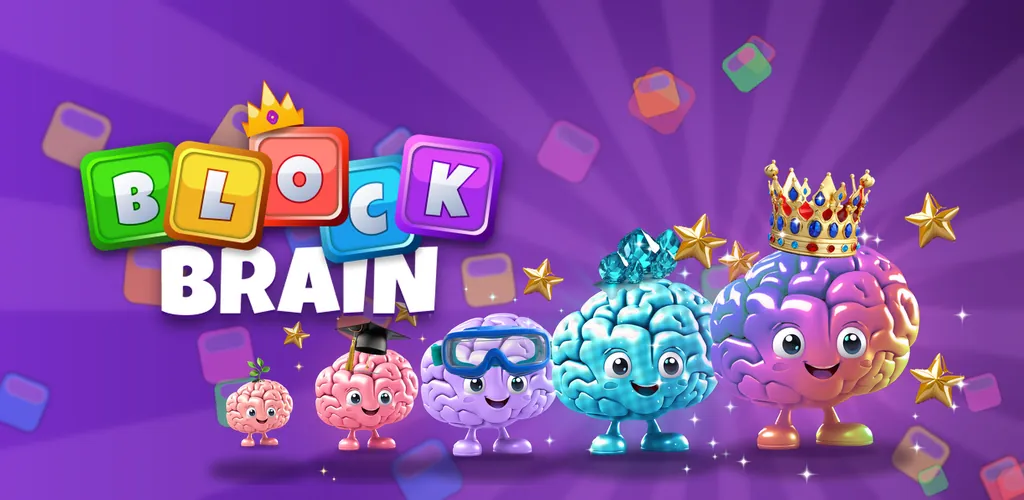
A real example: Block Brain's leagues
Here are the exact rules of the weekly leagues in our block puzzle game, Block Brain:
- Five leagues: Bronze, Silver, Gold, Diamond and Mastermind.
- Weekly: from Monday 00:00 UTC to the next Monday.
- Groups of up to 30 players in your league, filled as players join during the week.
- Points are the Brain XP from every finished game: lines, combos, board clears and new best scores.
- The top 5 of each group move up; the bottom 5 move down (in groups of at least 10). Nobody drops below Bronze.
- Ties: the player who joined the week earlier ranks higher.
- Prizes: the top 3 win coins and a new cosmetic for their Brain, from 80, 50 and 30 coins in Bronze to 160, 100 and 60 in Mastermind.
- Privacy: everyone gets a generated nickname, like Clever Otter 42, so nobody types a name.
Two design choices show how leagues are tuned. Points earned offline are kept and sent the next time you are online that week, so a flight does not cost you your place. And if you skip a week, you start again in the league you last played in, so promotion only counts if you keep playing.
Why games put you in small groups
- Motivation: being 3rd of 30 feels like something; being 3,000,000th does not.
- Fair matchups: leagues group players by level, so beginners are not ranked against veterans.
- A fresh start every week: a bad week is forgotten on Monday.
- Retention: a weekly goal brings players back, which is also why developers like leagues.
Daily rankings: the lighter version
Some games rank you only against the day's players. Block Brain's Daily Puzzle is the same for everyone, and once at least 20 players have played it, you see a line like Better than 73% of today's players. Only your first try counts, and only the day and your score are sent, never a name.
How to climb a league
- Play a little every day rather than a lot on one day; weekly leagues reward steady points.
- Know what gives points. In Block Brain, lines are the steady source, and a new best score adds 30 XP.
- Join early in the week. In Block Brain, ties go to the player who joined earlier.
- Check the standings before the week ends. Leagues usually close at a fixed time, often in UTC.
- Do not burn out. Leagues reset every week; a demotion is one good week away from undone.
Rankings in idle games
Idle games use rankings too, usually weekly: our Idle Ronin ranks players on the weekly Neon Tower leaderboard, with rewards for everyone who reaches floor 5. See endless towers in idle games.
FAQ
How do leagues work in mobile games?
You are placed in a small group for a week, earn points by playing, and at the end of the week the top players move up a league and the bottom players move down.
Do I need internet for leagues?
To send your points and see the standings, yes. Some games, like Block Brain, keep points earned offline and send them later that week.
Are leaderboards fair?
Global leaderboards are dominated by the most dedicated players and sometimes by cheaters; leagues are fairer for most people because they compare you with a small, similar group.
Sources
- ONI Games code: Block Brain leagues and Daily Puzzle ranking, Idle Ronin Neon Tower ranking, September 2026.