Guides / How Mobile Games Work
Energy and Stamina in Mobile Games: Why They Exist
 ONI Games · Published
Energy, stamina, lives and daily attempts limit how much you can play. Why designers use them, when they are fair and when they are a paywall, and how our own games limit play without energy.
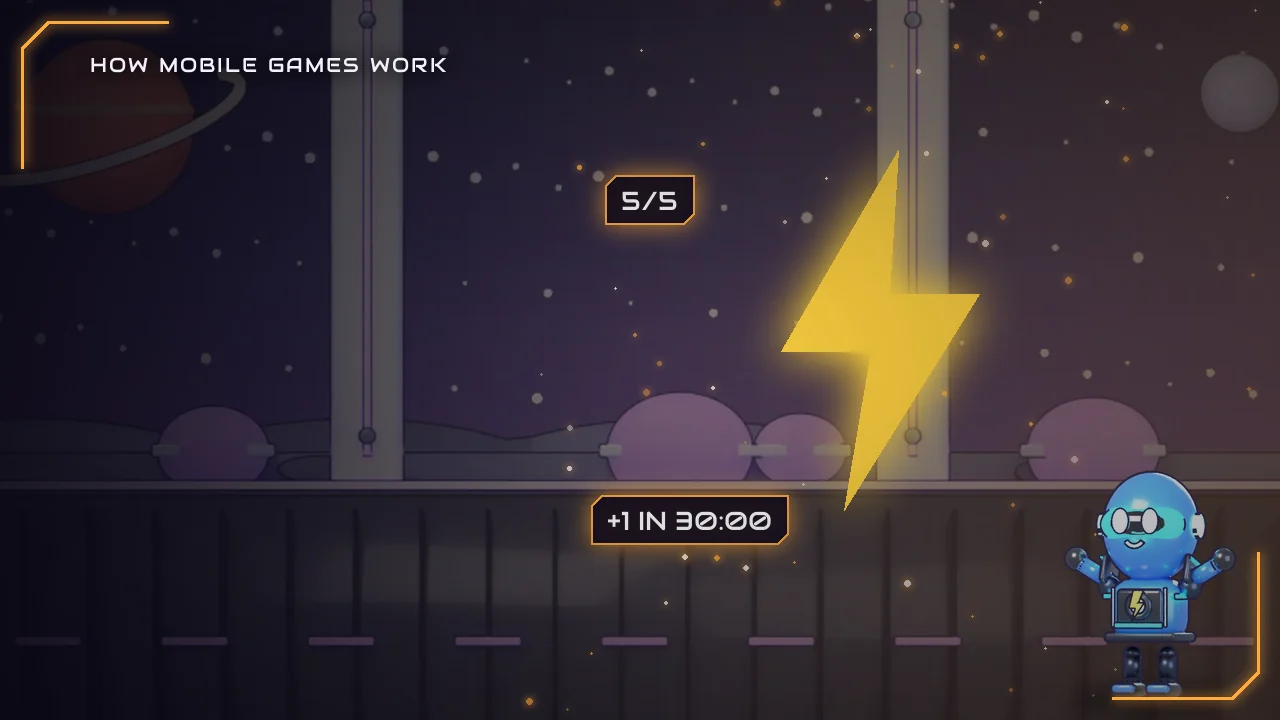
An energy system limits how much you can play: each level or fight costs energy, and energy refills over time. Games use it to pace their content, to bring you back later, and to sell refills. It can be a fair way to stretch a game over weeks, or a wall that stops you just when you are having fun.
Fair or not? An energy system is fair when a free player can play as long as they reasonably want each day. It is a paywall when you run out within minutes and the only way on is to pay or wait hours.
The kinds of energy systems
| System | How it works | Common in |
|---|---|---|
| Energy or stamina | each action costs points that refill over time | RPGs, story games |
| Lives | failing costs a life, lives refill one by one | puzzle games |
| Daily attempts | a fixed number of tries per day for a mode | side modes in RPGs |
| Keys or tickets | a resource you spend to enter a mode | dungeons, towers |
Lives in puzzle games are the best-known version: fail a level, lose a life, wait for it to come back or ask friends. Many big puzzle games made this the standard.
Why games use energy
- Pacing. A game with a hundred hours of content that you could finish in a weekend would be over too soon; energy stretches it out.
- Coming back. Energy that refills over time is a reason to open the game later.
- Balance. In games with rankings, energy stops the players with the most free time from pulling far ahead.
- Selling refills. The less generous the system, the more it is about this one.
Our approach: limits on side modes, not on the main game
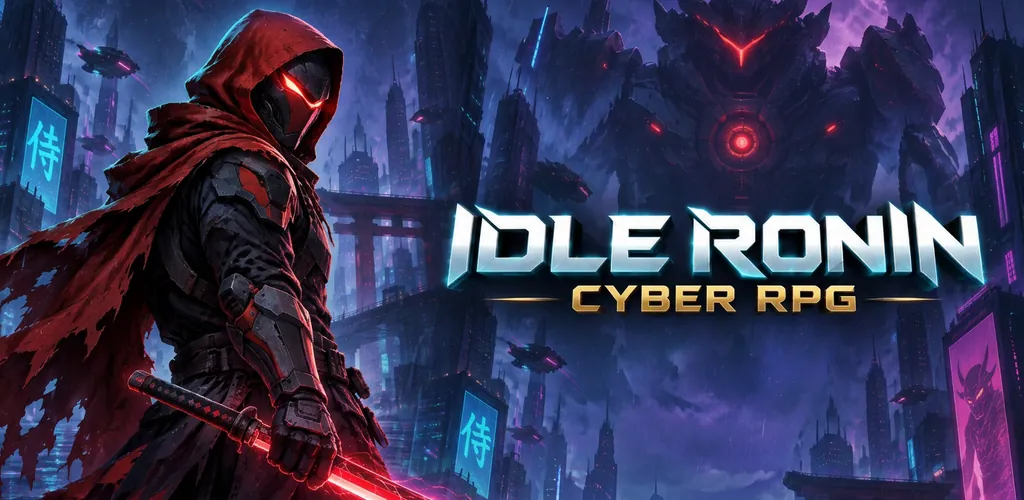
Our idle games do not use energy on the main game at all: you can play Idle Ronin's stages or Block Brain's Classic mode as long as you want. We do limit side modes, and here are the exact rules:
- Idle Ronin's Neon Tower: winning a floor is free; only a lost fight uses one of 5 daily tickets. So a good player climbs for as long as they keep winning.
- Idle Ronin's dungeons: each of the three gives 2 keys a day, and the shop sells at most 2 extra keys a day. The dungeons refill on their own, and we kept that deliberately small.
- Block Brain: no lives and no energy; a run ends when no piece fits, and you can start the next one right away.
How to spot an unfair energy system
- You run out in the first few minutes of play.
- Energy refills slowly (hours for a single session) and refills are sold at every turn.
- Energy is spent on failure, and the game is tuned so you fail often.
- Events demand more energy than a free player can earn.
How to play games with energy
- Use energy before it caps. Most systems stop refilling at a maximum; energy past it is wasted.
- Spend it where it counts, like event stages or daily bonuses.
- Collect free refills from daily rewards and quests.
- Do not buy refills to finish a level. It is the most expensive way to spend in most games.
- Prefer games without energy on the main mode if you like long sessions.
FAQ
Why do mobile games have energy?
To pace their content, bring you back later and, in many free games, sell refills.
Are there good mobile games without energy?
Yes: most idle games, premium games and block puzzles have none. Our idle games only limit side modes such as dungeons and towers.
Is it worth buying energy?
Rarely. Energy is used up immediately, so the money buys a few minutes of play. One-time purchases are almost always better value.
Sources
- ONI Games code: Idle Ronin (LiveOps.cs: tower tickets, dungeon keys), Block Brain, September 2026.