Guides / How Mobile Games Work
How Mobile Game Progression Is Designed (From a Studio That Does It)
 ONI Games · Published
Why the first minutes of a mobile game are so generous, why features unlock one by one, where the walls are placed and what keeps you coming back, with the real unlock schedule of our idle RPG.
Mobile game progression is designed in layers: a very fast first few minutes, features that unlock one at a time over the first days, walls that slow you down on purpose, and daily and weekly loops that bring you back. Every number is chosen to keep the game feeling fresh without letting you finish it too soon.
The four layers: the first session (fast wins), the first week (one new feature at a time), the long game (walls and resets), and the daily rhythm (quests, rewards, events).
The first minutes: fast wins
The first session has one job: to show you the fun before you get bored. That is why early upgrades are cheap, the first boss falls easily, and rewards come every few seconds. In Block Brain, for example, the game deals three pieces that all fit your board while you are below 1,000 points, and only then slowly stops helping.
The first week: one feature at a time
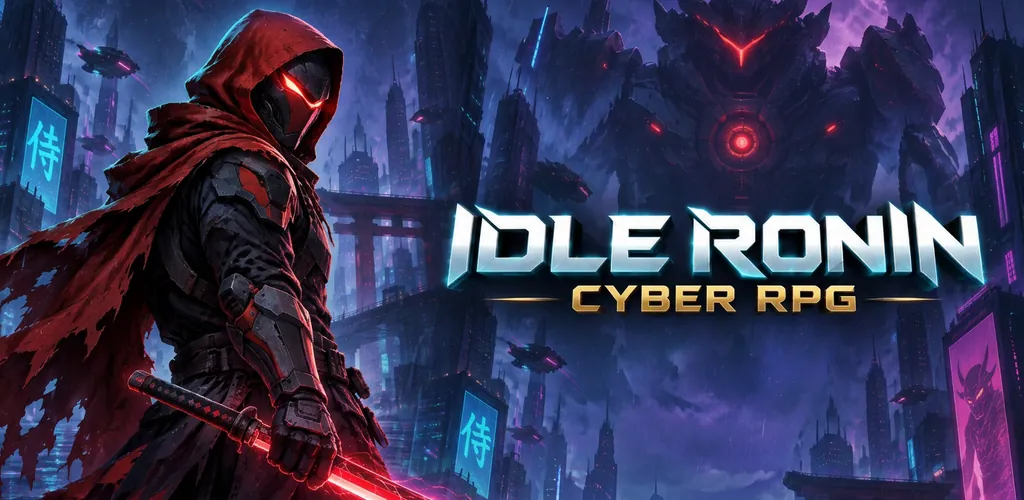
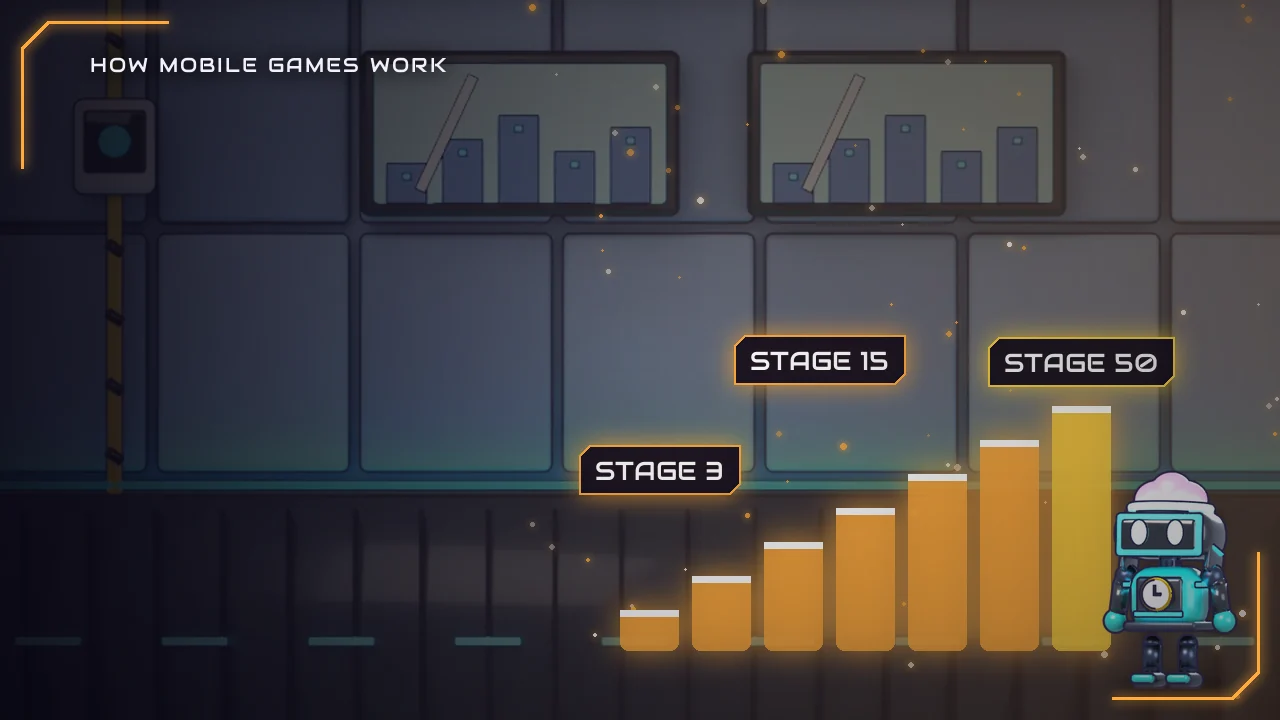
Showing everything on day one overwhelms players, so features unlock as you progress. Here is the real unlock schedule of our Idle Ronin:
| Stage | What unlocks |
|---|---|
| 3 | daily quests, the 7-day login calendar and a free supply drop every 4 hours |
| 5 | the Cyber Pass |
| 8 | the starter pack offer |
| 10 | dungeons (Gold Vault, Crystal Mine, Core Factory) |
| 15 | the Neon Tower |
| 40 | a free skin in the shop |
| 50 | Rebirth, and after the first one, Guardians |
| 65 | Side-Jobs |
| 80 | equipment crafting (more slots at 100, 150, 200 and 500; set bonuses from 125) |
Each unlock gives you something new to learn just as the previous thing becomes routine. New units also join the random pool at stages 21, 40, 90 and 125, so the roster grows with you.
The long game: walls and resets
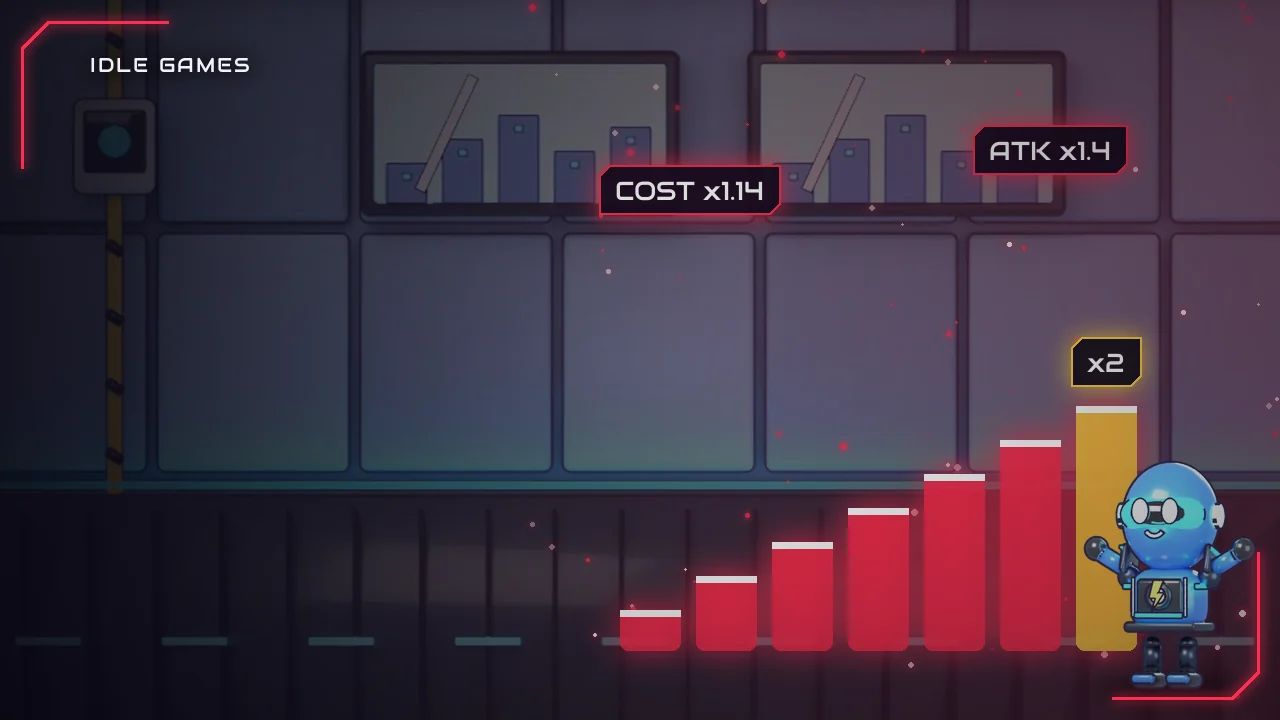
Later, progress is paced by walls: costs that grow faster than your power, and bosses with far more health. Walls are where you are asked to try something new: a better team, a new system, or a rebirth. We show the maths in how idle game progression works and prestige, rebirth and ascension.
The daily and weekly rhythm
Around the long game sits a rhythm: daily quests and login rewards, keys and tickets that refill every day, weekly rankings and seasons. In Idle Ronin, a Cyber Pass season lasts 28 days and the Neon Tower restarts every week. In Idle AI Factory, events run every weekend. These loops give you a reason to return even when the main progression is slow. See why games have daily rewards and how battle passes work.
Where money fits in
In free games, progression and money are designed together: offers appear at moments of friction, like a starter pack after the first few stages (stage 8 in Idle Ronin) or a boost when you hit a wall. Knowing that helps you decide calmly. Our rule of thumb is simple: a purchase should make the game better for you, not make it playable.
What makes progression feel good
- Something new every session: an upgrade, a unit, a floor, a feature.
- Visible milestones: a x2, a new world, a new rank.
- Walls with a way through: you are never stuck without an option.
- Resets that feel like progress: a rebirth should make the next run clearly faster.
FAQ
Why are the first levels of a mobile game so easy?
To show you the fun quickly. A player who struggles in the first minutes often never comes back, so games front-load the rewards.
Why do games unlock features slowly?
So you learn one system at a time, and so there is always something new to look forward to.
Why does progress slow down later?
Costs grow faster than your power by design. The slowdown is where the game asks you to use its deeper systems, like rebirth.
Sources
- ONI Games game code: Idle Ronin (LiveOps.cs unlock stages, guides), Block Brain piece generator, Idle AI Factory weekend events, September 2026.