Guides / Idle RPGs
Gacha, Pity and Drop Rates Explained (With Real Odds From Our Game)
 ONI Games · Published
What gacha means, how to read drop rates, why a 1% chance often takes far more than 100 tries, what pity systems do, and the real chest odds from one of our own games.
A gacha is a random draw in a game: you spend currency and get a random character or item, with rarer results being less likely. The name comes from gashapon, the Japanese capsule toy machines where you turn a handle and never know which toy you will get. Pity is a safety net some games add: after a certain number of draws without a rare result, the next one is guaranteed or much more likely.
The most important number: with a 1% chance per draw, you need 69 draws for an even chance of success, 230 for a 90% chance and 459 for 99%. Rare means rarer than it sounds.
How drop rates work
Every draw is independent: the game rolls a random number, and the result depends only on the odds, not on what happened before (unless there is pity). Games publish these odds, and they are required to: China made game companies disclose loot box probabilities in 2016, Apple's App Store has required it since December 2017, and Google Play since 2019, for any random item you can get for money.
Here are the real odds from our game Idle AI Factory, where chests hold collectible robots with bonuses:
| Chest | Cards | Common | Rare | Epic | Legendary |
|---|---|---|---|---|---|
| Basic Chest | 2 | 80% | 18% | 2% | 0% |
| Rare Chest | 3 | 55% | 35% | 9% | 1% |
| Epic Chest | 4 | 30% | 45% | 20% | 5% |
One thing makes these chests different from most gacha: they are free only. You earn them from levels, drones, events and a free chest every 4 hours; they are never sold for money.
The maths of rare drops
Players tend to think a 1% chance means one success in 100 tries. It does not. The chance of at least one success in n tries is 1 - (1 - p)^n. For a 1% drop:
| Draws | Chance of at least one |
|---|---|
| 10 | 9.6% |
| 69 | 50% |
| 100 | 63% |
| 230 | 90% |
| 459 | 99% |
So after 100 draws, more than a third of players still have nothing, and a few unlucky ones will go past 400. That spread is exactly why pity systems exist.
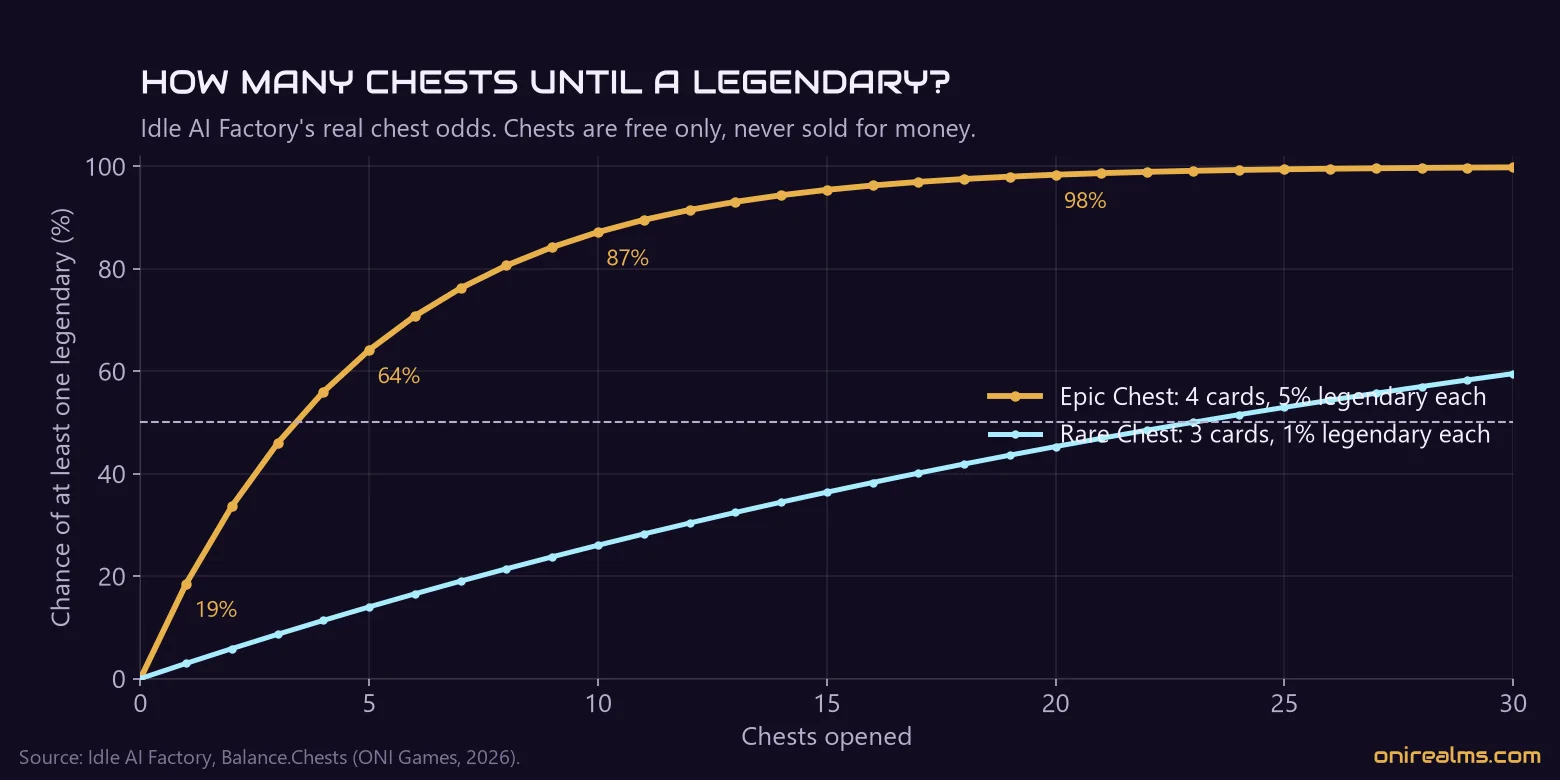
Our Epic Chest shows the same effect in a friendlier way. Each of its 4 cards has a 5% chance to be legendary, so one chest has an 18.5% chance of at least one legendary robot. Five chests reach 64%, and it takes about 20 for a 98% chance.
What is pity in gacha games?
Pity protects you from the worst luck. It comes in two kinds:
- Hard pity: after a fixed number of draws without a top-rarity result, the next draw is guaranteed to be one.
- Soft pity: from a certain number of draws, the chance starts to climb draw by draw.
Some games also have a "spark" or exchange system, where every draw gives a token and enough tokens buy the character you want directly. Always check whether pity carries over between banners, because that changes how much a guarantee is really worth.
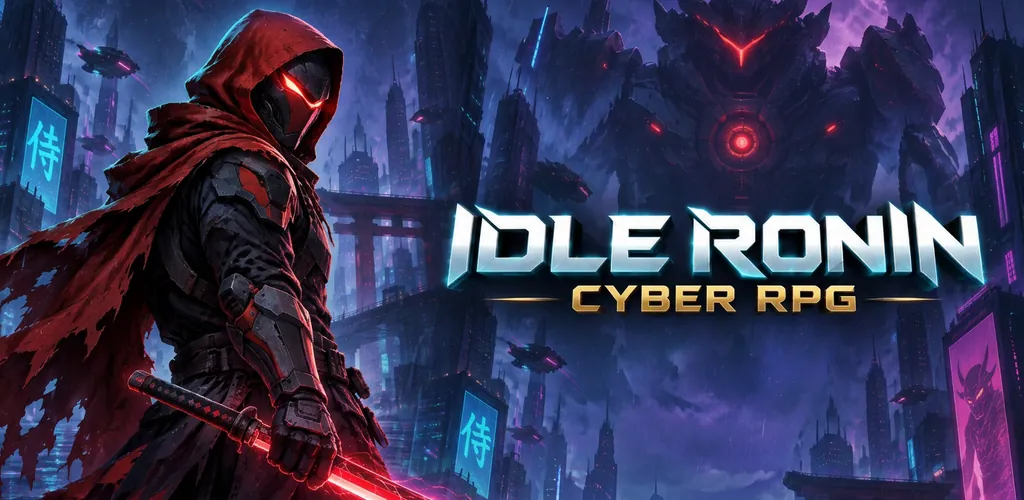
Our Idle Ronin has a simple hard pity: from stage 5, the Unit Core screen shows a FEATURED THIS WEEK cyborg, every core has a 12% chance to become it, and it is guaranteed within 30 cores. With 12% per core, most players get it much earlier: the chance of still not having it after 10 cores is 28%, after 20 it is 8%, and at 30 the guarantee kicks in.
Our Idle Summoner has a pity-like rule of its own in its summoning chain: every failed summon adds 1% to your success rate, up to +20%, and the bonus resets when you place a monster or turn one into gold. Bad luck makes the next try better.
Is gacha gambling?
It depends on who you ask and where you live. Gacha uses the same random reward loop as gambling, but you cannot cash out what you win, and many countries do not treat it as gambling. Regulators have focused on transparency instead: publishing the odds is required on both big app stores. What matters for you is simpler: if you are spending money on random draws, decide on a limit before you start, and never chase a loss.
How to spend smarter on gacha
- Read the odds before you pull. They are in the game, usually behind a small info button on the banner.
- Know the pity count. Know how many draws guarantee a result and whether your count carries over.
- Save for banners you want. Spreading currency over every banner is the slowest way to get anything.
- Prefer guaranteed purchases. A pass or a direct purchase gives you a known item for a known price.
- Set a budget. Google Play lets you set a monthly budget; our guide to stopping in-app purchases shows where.
FAQ
What does gacha mean?
A random draw for characters or items in a game, named after Japanese gashapon capsule toy machines.
What is pity in gacha?
A guarantee or a rising chance that protects you from very bad luck: after a set number of failed draws, you get the rare result.
Does a 1% drop rate mean one in 100?
On average over many players, yes, but for you it means a 63% chance of at least one success in 100 draws. You need 230 draws for a 90% chance.
Do games have to show drop rates?
Yes, on both Google Play and the App Store, for random items you can get with money, and in China by law.
Sources
- ONI Games code: Idle AI Factory chest odds (Balance.cs) and Idle Summoner summoning rules, September 2026.
- Regulations protecting consumers from microtransactions, Wikipedia (China, 2016).
- Games on the Google Play Store now required to disclose loot box odds, Game Developer, 2019.
- Google Play Now Requires Disclosure of Loot Box Odds, Fenwick (Apple's December 2017 rule).